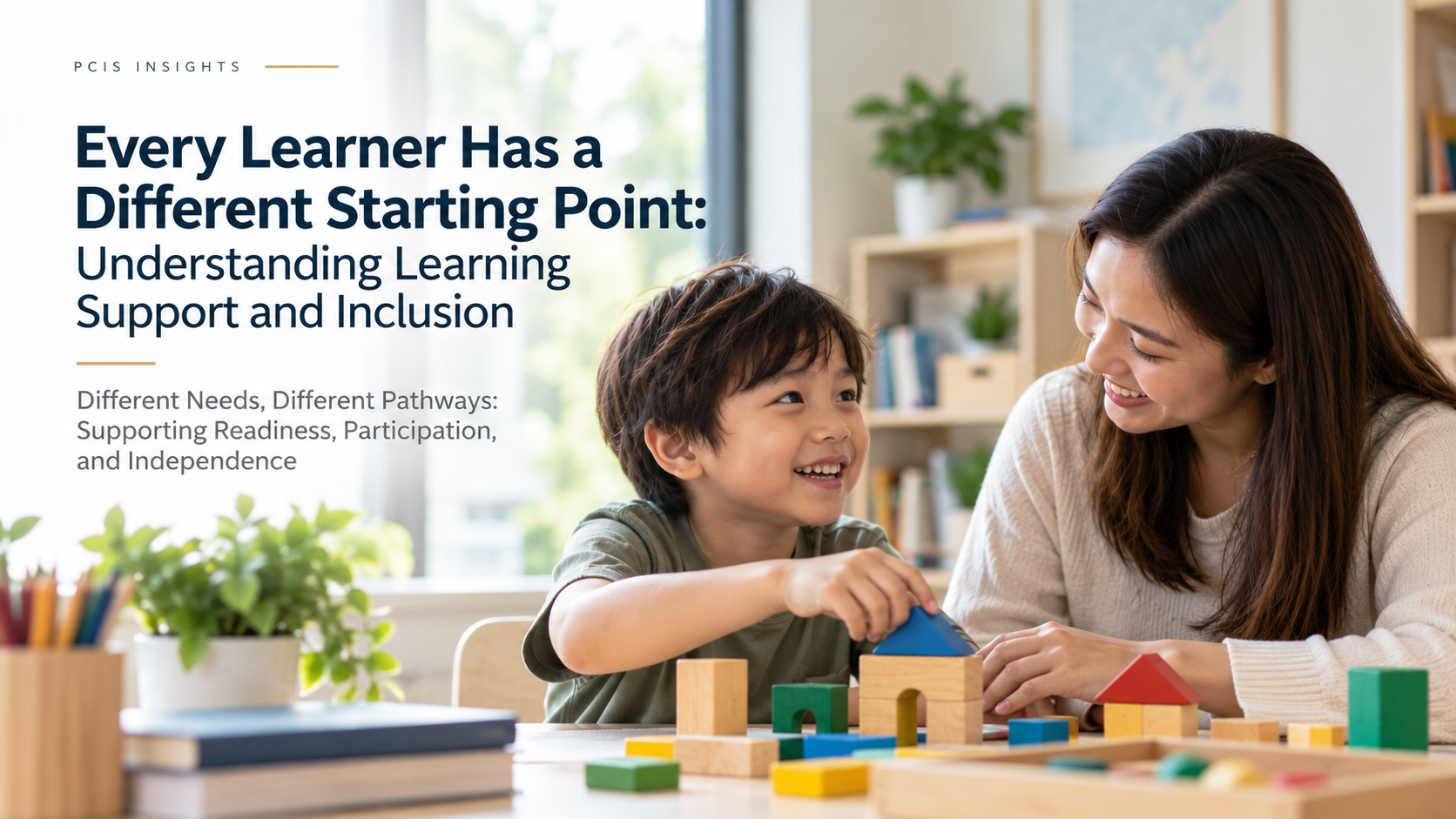
Every Learner Has a Different Starting Point: Understanding Learning Support and Inclusion
Different Needs, Different Pathways: Supporting Readiness, Participation, and Independence
Every learner has a different way of learning, participating, communicating, and developing.
Some children may need additional support as they build communication and social skills. Others may be developing their readiness for learning, while some learners may benefit from opportunities to strengthen independence and functional skills for everyday life.
These differences do not make one learner less capable than another.
They remind us of something important:
Meaningful learning does not always follow one path.
For parents, this can lead to a deeply important question:
What kind of support and learning environment can help my child take the next meaningful step?
At Philippine Cambridge International School (PCIS), Learning Support and Inclusion (LSI) recognizes that learners may have different strengths, needs, and pathways to development and participation.
Two programmes within LSI—SPARK and SHINE—provide distinct pathways focused on different aspects of learner development.
 Learning Is More Than What a Learner Can Do Academically
Academic progress is important.
But it is only one part of a learner's development.
Communication. Social interaction. Readiness. Independence. Daily living. Engagement.
These can all influence how a learner participates in school and everyday life.
A learner may be developing one area while still building another. This is why understanding the whole learner matters.
The question is not simply, “What can this child do?”
It is also:
“What support can help this child develop what comes next?”
The Right Support Begins Where the Learner Is
Children do not all develop at the same pace or demonstrate their strengths in the same way.
One learner may be building confidence in communication and social interaction.
Another may be preparing for greater participation in structured learning.
Another may be working toward greater independence in everyday routines.
These differences matter because the starting point influences the pathway.
Learning Support and Inclusion recognizes that support can be more meaningful when it responds to the learner—not when the learner is expected to fit a single model.
When Readiness Comes Before the Next Academic Step
For some learners, the next important step may not be another academic task.
It may be communication.
It may be social interaction.
It may be participation.
It may be developing greater readiness to engage with learning.
This is where a play-based approach can provide a meaningful context for development.
SPARK — Social, Play, And Readiness for Knowledge
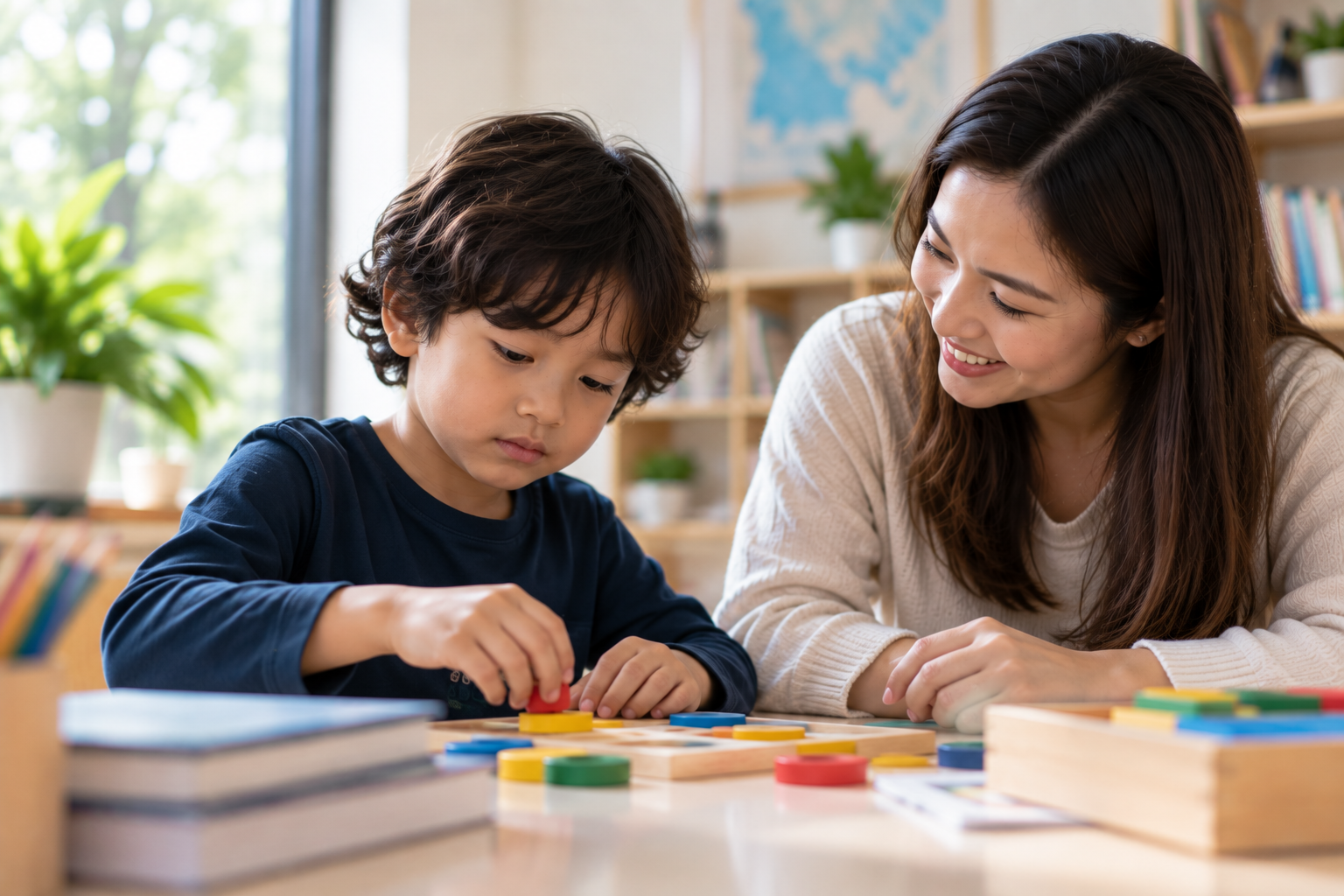
The SPARK programme focuses on communication, social skills, learning readiness, and development through play-based learning.
Its focus recognizes that learners can develop important foundational skills through opportunities to play, interact, communicate, and participate.
SPARK centers on a simple idea:
Before asking, “What should the learner learn next?” we can also ask, “What does the learner need to be ready to learn?”
 When Independence Becomes Part of the Learning Journey
Learning does not end when a lesson ends.
For some learners, meaningful development also happens through everyday routines, practical activities, and opportunities to become more independent.
Daily living skills can matter.
So can the ability to navigate everyday environments and remain engaged in activities.
SHINE — Skills for Home, Independence, Navigation, and Engagement
The SHINE programme focuses on independence, daily living, and functional skills.
Its areas of focus connect learning with practical aspects of everyday life—skills related to home, independence, navigation, and engagement.
SHINE reflects an important principle:
Independence is not separate from learning. It can be part of the learning journey itself.
Two Pathways. Different Needs. One Purpose.
SPARK and SHINE have different areas of focus because learners have different developmental priorities.
SPARK focuses on:
- Communication
- Social skills
- Play
- Learning readiness
- Development
SHINE focuses on:
- Independence
- Daily living
- Functional skills
- Navigation
- Engagement
The distinction is intentional.
SPARK is centered on readiness and development.
SHINE is centered on independence and functional learning.
But both share a broader purpose:
to support learners in meaningful participation and growth.
 What If Progress Looks Different for Your Child?
Progress does not always look the same from one learner to another.
For one child, progress may mean communicating more confidently.
For another, it may mean participating in an activity with others.
For another, it may mean becoming more comfortable with a routine.
And for another, it may mean taking a step toward greater independence.
These moments can be easy to overlook when progress is measured only through traditional academic outcomes.
But development happens in many forms.
Sometimes, the next big step begins with a small one.
Inclusion Starts With Seeing the Whole Learner
A learner should not be defined only by the areas where they need support.
They also bring strengths.
Interests.
Experiences.
Potential.
This is where inclusion becomes important.
An inclusive learning environment recognizes that learners may have different needs while still deserving meaningful opportunities to participate, develop, and belong.
Inclusion is not about making every learner the same.
It is about creating space for different learners to grow.
The Question Is Not “What Is Wrong?” — It Is “What Comes Next?”
For parents, exploring learning support can sometimes feel uncertain.
You may wonder:
- Does my child need more support with communication or social interaction?
- Would play-based learning support my child's readiness?
- Is my child ready to develop greater independence?
- Could functional learning support participation in everyday activities?
- What kind of learning environment could help my child take the next step?
These are not questions about finding something wrong with a child.
They are questions about understanding what support may help the learner move forward.
That shift in perspective can make the conversation about learning support more hopeful—and more purposeful.
 A Different Path Is Not a Lesser Path
Every learner has a different starting point.
Some may need a pathway focused on communication, social skills, play, and readiness.
Others may benefit from a pathway centered on independence, daily living, navigation, and functional learning.
Choosing a different pathway does not mean lowering expectations.
It means recognizing that meaningful progress may require a different route.
The destination is not to make every learner identical.
The goal is to help each learner continue developing from where they are.
Helping Learners Move From Where They Are to Where They Can Go
Learning is a journey.
And every learner begins that journey from a different place.
Through Learning Support and Inclusion (LSI), PCIS recognizes that meaningful development can take different forms.
SPARK provides a pathway focused on social skills, play, communication, readiness, and development.
SHINE provides a pathway focused on independence, daily living, navigation, engagement, and functional learning.
Together, they reflect a simple belief:
Every learner deserves to be understood. Every learner deserves to participate. And every learner deserves an opportunity to grow.
Your Child's Next Step May Begin With the Right Support
If you are exploring learning support options for your child, understanding the available pathways can be an important first step.
At Philippine Cambridge International School, Learning Support and Inclusion recognizes the different ways learners develop and participate.
Discover the LSI pathways at PCIS and learn more about SPARK and SHINE.
Explore Learning Support and Inclusion at PCIS
Talk to the PCIS Admissions Team About Your Child's Learning Journey
Frequently Asked Questions About Learning Support and Inclusion
What is Learning Support and Inclusion?
Learning Support and Inclusion (LSI) recognizes that learners may have different strengths, needs, and pathways to participation and development. At PCIS, LSI includes learning pathways focused on different aspects of learner development.
What is the SPARK programme?
SPARK stands for Social, Play, And Readiness for Knowledge. It focuses on communication, social skills, learning readiness, and development through play-based learning.
What is the SHINE programme?
SHINE stands for Skills for Home, Independence, Navigation, and Engagement. It focuses on independence, daily living, and functional skills.
What is the difference between SPARK and SHINE?
SPARK focuses on communication, social skills, play, learning readiness, and development, while SHINE focuses on independence, daily living, navigation, engagement, and functional learning.
How can parents learn more about the LSI programmes?
Parents can connect with the PCIS team to discuss their child's learning journey and learn more about the available Learning Support and Inclusion pathways.